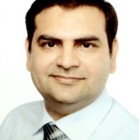
Paul Bacsich
Managing Director and Chief Researcher, Matic Media Ltd
Paul Bacsich is the Founder and Managing Director of Matic Media Ltd, a consultancy in the UK active in online learning since 1996. He is also CEO of Dualversity, an alliance of consultants.
He has had over the years a wide range of consultancy interests covering all sectors of education, but currently he is mainly focused on universities. Activities and topics include use of AI in learning and assessment, cost-benefits of online learning (and how AI will change that), project evaluation, quality processes, and institution/project review.
Before becoming a consultant, he had a long career in universities, finishing this phase as Professor of Telematics at Sheffield Hallam University, where he set up the Virtual Campus, with a strong pedagogic focus on collaborative distance learning.
In the last few years, he has also been part-time Professor of Practice for the University of West Indies Open Campus (3-year appointment) and Visiting Professor at the University of Derby Online. Formerly he was Visiting Professor at Middlesex University, Advisor to the Rector of the Arab Open University and Visiting Researcher at institutions including the National Institute of Multimedia Education (now the Open University of Japan), University of Sao Paulo School of the Future, Canterbury University New Zealand and Deakin University.
He has a long-standing interest in mathematical logic (in which he did his doctorate) and artificial intelligence (Alvey Programme). In 2023 he started using ChatGPT as an aid in project research for clients and in early 2025 he began extensive work on the extent to which LLMs can automate the creation and revision of well-referenced long reports (up to dissertation length) on global topics (e.g. virtual schools, OER policies) and the extent to which such automation was detectable.
For many years he was a Senior Consultant at Sero Consulting Ltd. He led the Sero team who reviewed Learning Technology Support at the University of Oxford, and the team who developed an accredited vocational short online course to teach teachers to teach online for Wey Education. In that phase he developed a long-standing interest in Open Education, first via leading a large EU project (POERUP) and several EU/European Parliament studies. He was a co-author for the JRC 2017 report “Policy Approaches to Open Education in 28 Member States”.
His interests in leadership in e-learning were refined during the Erasmus+ D-TRANSFORM project 2014-17, which drew on and continued his work over 20 years on management of open and distance learning. He has also worked on and led EU projects on virtual campuses (Re.ViCa), virtual schools (VISCED) and distance learning for EU Outermost Regions.
In addition to his university-related work he consults for a number of international agencies (OECD and UNESCO), and government bodies (UK/CA/IE) on market/competitor/pricing research, policy, education funding models and retention strategies. He also has consulted for a large venture funding client on due diligence, competitor research and acquisition.
In 2015-16 he chaired the review panel for the Vision and Strategy Appraisal of the UK Open University Library, where he interviewed over 70 staff and students and carried out substantial comparative and policy research. He also chaired the E-learning review panel for Uppsala University, with three days of intensive meetings and presentations, and spent four months chairing a task force for the National Forum for Learning and Teaching in Ireland to prepare a scoping document on infrastructure issues related to online learning. He has also consulted for several universities in each of UK, Sweden and Canada, and recently carried out a project review for an Irish University.
In his early career he was a researcher at University of Oxford, then had many roles over 25 years at the UK Open University, ending as Assistant Director (and one of the co-founders) of the Knowledge Media Institute (KMI), after which he became a full professor at Sheffield Hallam University.